
Conference programme
Conference programme
24 June 2026, Wednesday
| 08:30–09:00 | Registration |
| 09:00–10:00 | Official Opening and Welcome Speeches
Péter Hermann - Vice-Rector for Educational Affairs, Semmelweis University |
| 10:00–10:45 | Reforming Europe's Research Policy: The EU's Fifth Freedom and the ERA Act (Keynote Speech)
Thomas Sturm – Universitat Autònoma de Barcelona (UAB) |
| 10:45–11:15 | Coffee Break |
| 11:15–12:30 | Mobility as the Human Infrastructure of the Fifth Freedom (Panel Discussion)
Moderator: Anna Taraczközi – DOSZ |
| 12:30–13:30 | Lunch |
| 13:30–14:00 | Academic Freedom as the Foundation of Research and Democracy (Keynote Speech)
Pil Maria Saugmann – Eurodoc |
| 14:00–15:15 | Mobility & Careers: Perspectives from Europe to Hungary (Panel Discussion)
Moderator: Attila Csomos – DOSZ |
| 15:15–15:45 | Coffee Break |
| 15:45–16:15 | Policy Tools for the ERA Act: From Principles to Implementation (Keynote Speech)
Magda de Carli – EC, DG Research and Innovation |
| 16:15–16:45 | Closing of the Day
Nicola Dengo – President, Eurodoc |
| 19:00– | Conference Dinner (Invitation Only) |
25 June 2026, Thursday
| 08:30–09:00 | Registration |
| 09:00–10:00 | Challenges of International Research Communities (Presentations)
Moderator: Aleksandra Lewandowska – Eurodoc Early Career Researchers as Policy Actors: Lessons from the Marie Curie Alumni Association and 30 Years of MSCA Bridging Without Power? Early Career Researchers and the Tensions of Engagement Beyond Academia Between formal access and practical barriers: international doctoral students' participation in Hungarian academic governance |
| 10:00–10:45 | ECRs in Academic Governance I.: ECRs and Society (Presentations)
Moderator: Magali Weissgerber – Eurodoc Advocates for ECRs or Ambassadors for Science and Society? ADI and the Italian case Not-So-Good Practices: What Survey Data Reveal About PhD and Postdoctoral Conditions in Spain Empowering Early Career Researchers in Ukraine: Good Practices from the Young Scientists Council at the Ministry of Education and Science of Ukraine |
| 10:45–11:15 | Coffee Break |
| 11:15–12:30 | ECRs in Academic Governance II.: From Policy to Practice (Presentations)
Moderator: Karl Kilbo Edlund – Eurodoc ECRs in Academic Governance: Lessons from Norway and the Nordic Model of Democratic Participation Beyond Engagement: Towards Meaningful Representation of Early-Career Researchers in Ireland Early career researchers and the path from involvement to recognition From Policy to Practice: ECR Perspectives on the Implementation of Doctoral Reform in Czechia German Universities and HEIs – The "Hochschulurteil/Higher Education Act" from 1973 to the present: Governing Bodies, Joint Decision-Making, and the Role of ECRs and Research Employees |
| 12:30–13:15 | Lunch |
| 13:15–14:15 | Building Strong ECR Communities I.: Building Connections and Trainings (Presentations)
Moderator: Luka Savic – Eurodoc From guests to stakeholders: empowering international doctoral researchers in ECR communities Understanding Training Experiences and Needs in MSCA Fellowships: Insights from Postdoctoral and Doctoral Network Fellows Building a Sustainable Postdoc Community: Funding and Governance Model from Umeå University Best practice of the Young Academy of Slovenia: Mentor of the Year Award |
| 14:15–15:15 | Building Strong ECR Communities II.: Building Networks and Programmes (Panel Discussion)
Pil Maria Saugmann – Eurodoc ValDem programme |
| 15:15–15:30 | Closing of the Conference
Nicola Dengo – President, Eurodoc |
| 15:30–16:00 | Closing Coffee |
| 16:00–17:45 | Workshops (Open only for Eurodoc delegates) |
| 19:00–20:30 | Buda Castle Guided Tour |
| 20:00–21:30 | Standing Reception at the Buda Castle |
The organizers reserve the right to change the programme.
Venue
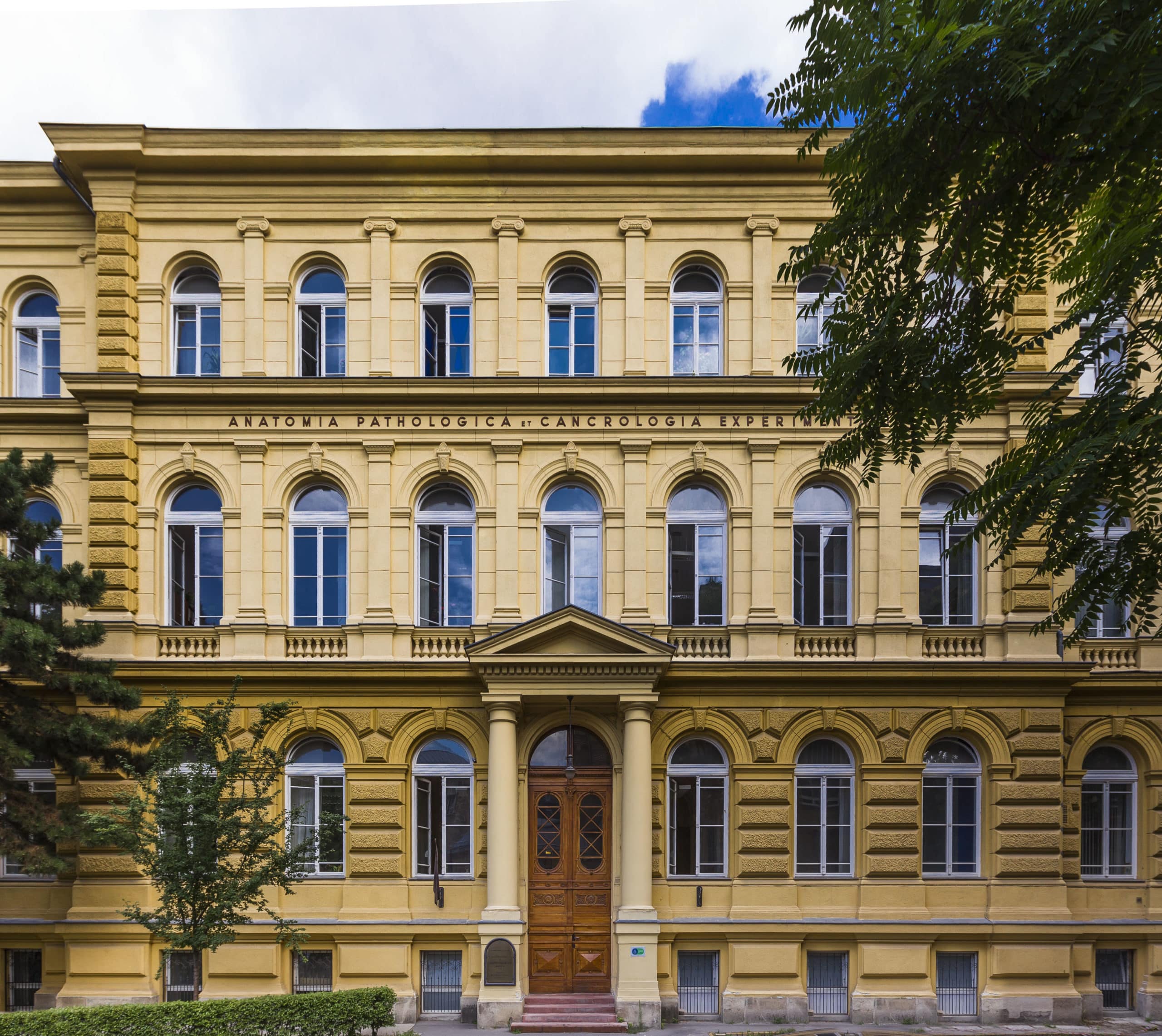
About Semmelweis University
Semmelweis University is a leading institution of higher education in Hungary and the Central European region within the area of medicine and health sciences. Its main commitment is the integrity of education, research and healing, which makes the more than 250-year-old Semmelweis University an internationally recognized center of knowledge. As a specialist university, it holds a unique place within the country.
Semmelweis University - More than 250 years in the service of health
The brochure is available in PDF format.
Inspiring educational environment, future-proof technologies
A truly international community, programs are offered in three languages (Hungarian, English, German). The number of our students is almost 16,000 and is constantly growing. A third of our students come from 5 continents of the world with the aim of continuing their studies with us at the University’s six faculties. Semmelweis University is an employer of more than 14,000 employees and is involved in higher education vocational training, specialist postgraduate training, higher education vocational training, the cultivation of the next generation of scientists, and nurturing talent.
Patient care at the highest level
In addition to teaching, Semmelweis University is the largest provider of health care services in Hungary. Even though practical teaching takes place at the university’s clinics and hospitals, they provide the highest quality patient care services at the same time. Most of the departments cater for the most serious cases and patients requiring complex treatment, thus making the university a national health care provider.
Research focusing on knowledge and innovation
Research, development, and innovation comprise an important part of the University’s three-fold mission. The target of research at the university are early diagnostics and therapy, disease prevention and active ageing. Many of its professors are members of the Hungarian Academy of Sciences, with close collaboration between the two institutions in numerous areas. The University organises international conferences and is represented on numerous international scientific boards. Its academic reputation is well-regarded around the world.
Semmelweis University Facebook // LinkedIn // Instagram // Youtube / Website
The conference aims at providing sufficient opportunity for insights by stakeholders and for discussions with them, while also making room for contributions by early-career researchers. This year, we do so by exploring the powerful role of ECRs as ambassadors for science and society, emphasizing their influence within academic governance and their potential to reshape dialogue between science and the public. For this reason, the conference will consist of a mix of plenary presentations and panel discussions, short talks, and workshops.
The conference programme will be available soon.